Remote Origins
- Operations Director: Madelynne Cornish
- Artistic Director: Philip Samartzis
- Design + Development: Public Office
- PO Box 456, Mount Beauty, 3699,
Victoria, Australia - EMAIL / FB / TW / IN
The Bogong Centre for Sound Culture is a remote-regional cultural initiative situated in the foothills of Victoria’s Alpine National Park. Established by Philip Samartzis and Madelynne Cornish the Centre supports projects focusing on the processes and impacts of sustainable energy production; effects of climate change in wilderness areas; ethnographic studies of remote communities; the chronicling of vanishing industrial procedures; and systems of representation used to render natural and built environments.
Additionally, the BCSC facilitates a broad cultural program comprising, festivals, exhibitions, publications, master classes and artists’ talks focusing on site-specific art practices. These programs establish a connection with place, its inhabitants, geographic space and memory. They engage a wide range of audiences, bringing together local, interstate and international artists across multiple disciplines and fields to realise ambitious works.
The BCSC is situated at the newly restored old school at Bogong Alpine Village located 350 kilometres from Melbourne in North East Victoria.

About Bogong Village
Bogong Alpine Village is 325 kilometres North-East of Melbourne situated at an altitude of 800 meters in the Alpine National Park between Mount Beauty and Falls Creek. The village was established in the late 1930s to service the first hydroelectric scheme in mainland Australia. More recently it has become a popular site for alpine sports, recreation and ecotourism. Click here for directions.
A Short History
Work on the Kiewa Scheme commenced in 1938 with the construction of a road from Tawonga to the High Plains. Previously the only access was by foot or horseback along tracks that had been forged by cattlemen of a bygone era. Bogong Village was established once the road from Junction Camp was trafficable (March 1939); this paved the way for the construction of permanent buildings. Prior to that life was tough; large canvas tents and flies were used for sleeping quarters and smaller tents were set up to house the kitchens. By 1940 Bogong Township had grown considerably with a general store, staff offices, recreational mess, police station, and a variety of accommodation such as single men’s quarters and residences for married staff and families.
Bogong State School
In 1941 the Primary School at Bogong Village enrolled its first intake of students comprising nine pupils. Initially the school consisted of a large classroom, storeroom and boys and girls toilets. Extensions were carried out in 1944, which expanded the capabilities of the school. A library, storeroom, pupil’s lunchroom and shelter shed were added and rock gardens were established. By 1947 the number of students had grown to 46 all of whom were children of local SEC workers. Over the years class sizes fluctuated and the building remained unchanged. In 1980 it ceased to operate as a school and sat idle, eventually falling into disrepair. In 2004 it was sold along with many other buildings in the village.
Madelynne Cornish and Philip Samartzis bought the Old School and set about restoring it to its former glory. The rotting weatherboards and floorboards, smashed windows and flaking paint are now a distant memory. The newly refurbished building occupies it’s original footprint and bares a strong resemblance to it’s former self. Although the internals have been modernized remnants of it’s past history remain. The Old School once played a significant role in the fabric of village life. It inspired the community and helped shape the minds of those who studied there. It is our intention as custodians that the School once again functions as a place of inspiration.
- Reference: Kiewa Kids School Days at Bogong & Mount Beauty by Graham Gardner
- ISBN 0-646-36226-7. Published 1998
New Geography
Antarctica
26.01—18.02.2016
Sounds
Artists
- Supporters
- Australian Antarctic Division
- Creative Victoria

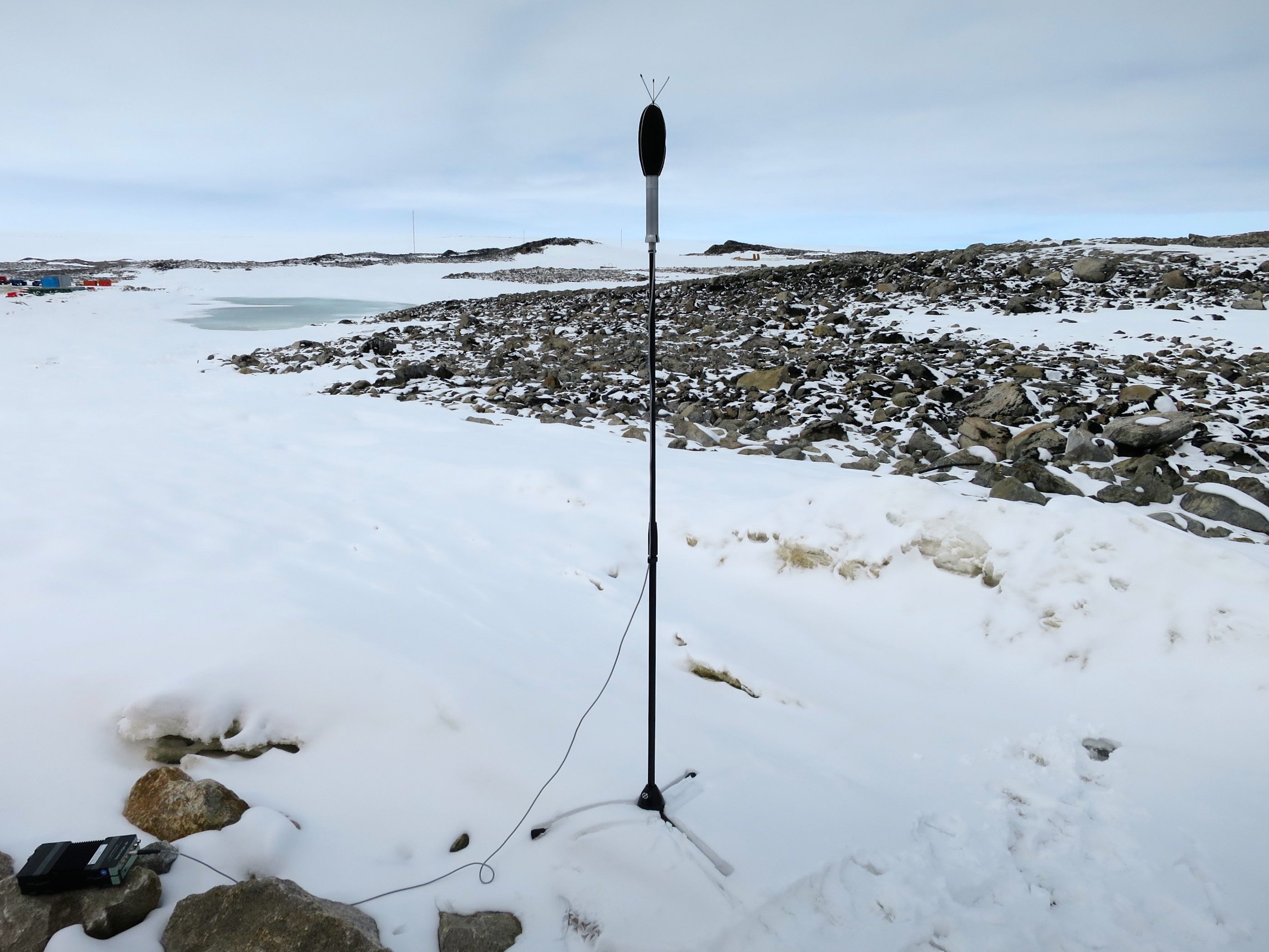
New Geography: Antarctica is predicated on fieldwork undertaken by Philip Samartzis at Casey Station as the 2015/16 Australian Antarctic Division Arts Fellow. The inspiration for the project is drawn from two Frank Hurley photographs ‘A Blizzard’ and ‘Leaning on the Wind’ both taken in 1912. In these photographs the ferocious nature of wind is depicted in dramatic circumstances as polar expeditioners struggle against an extreme force of nature – the blizzard. This project seeks to produce an embodied experience of Antarctica by deploying sound recording technologies specifically designed to tolerate the effects of cold in order to document the spatial and temporal flux of polar wind. It seeks to reveal new experiences of the continent though the agency of sound art by using a variety of sound recordings to construct immersive and tactile listening environments. While wind is a commonplace occurrence in Antarctica, its velocity and intensity makes it a difficult, and at times dangerous event to record. The innovation of this project is its capacity to communicate one of the most present and hazardous forces of the polar environment using new recording methodologies to authentically render the soundscape ecology of Antarctica.
Sounds From The Home Of The Blizzard: published 02.03.2016 in RealTime 131